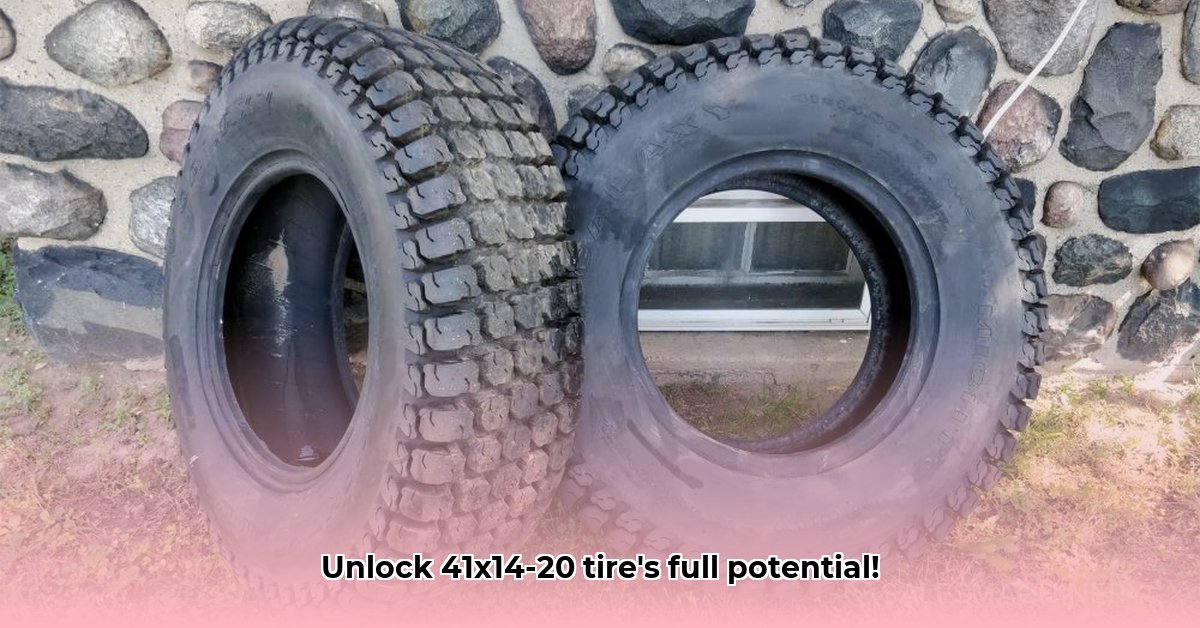
41x14-20 Tractor Tire: Understanding Your Investment
Your tractor tires are critical for efficient and sustainable farming. This guide focuses on the 41x14-20 tire, explaining its specifications, optimal applications, and essential maintenance practices. Understanding this tire's capabilities and limitations is key to maximizing your farm's productivity and minimizing downtime. Isn't optimizing your equipment performance a top priority for increased profitability? For more information on other tractor tire sizes, check out this helpful resource.
Decoding the 41x14-20: Dimensions and Implications
The "41x14-20" designation provides vital information about the tire's dimensions and capabilities. The "41" represents the tire's section width (41 inches), indicating its contact patch with the ground. A larger contact patch generally translates to better traction and load-bearing capacity. The "14" denotes the rim diameter (14 inches), ensuring compatibility with your tractor's wheels. Incorrect rim diameter can lead to dangerous tire failure. Finally, the "20" signifies the aspect ratio, which impacts the tire's overall height and profile. Choosing the proper size is crucial for equipment functionality and safety.
This size is often found on smaller tractors and equipment, ideal for many farms. Yet, performance varies significantly based on the manufacturer, construction, and tread pattern. Some excel in muddy conditions, while others prioritize longevity on paved roads. Which feature is most critical for your farm?
Choosing the Right Tire for Your Farming Needs
Selecting the perfect 41x14-20 tire requires careful consideration of several factors. It's about finding the right tool for the job – just like you wouldn’t use a hammer to screw in a screw.
Terrain Considerations: Matching Tire to Soil
The type of terrain you work dictates the necessary tread pattern. Deep, aggressive treads are ideal for muddy or loose soil, maximizing traction and preventing slippage. However, these treads wear down faster on paved surfaces. Conversely, smoother treads are better suited for hard surfaces, emphasizing durability over extreme grip. What kind of soil conditions do you predominantly work with?
Usage and Operational Requirements
How will you primarily use the tires? Fieldwork requires different characteristics than road transport. Constant road use increases wear, requiring more road-friendly tires. Fieldwork demands deep treads capable of handling mud and challenging conditions. What is the primary usage of your tractor?
Load Capacity and Speed Rating
The tire's load index indicates its safe weight capacity. This index must match or exceed your tractor’s weight plus any attached equipment. Underestimating load capacity leads to tire failure, equipment damage, and costly repairs. Similarly, the speed rating should match your operating speed; exceeding it drastically shortens tire life and increases the risk of failure. How much weight will the tires consistently carry?
Maintaining Peak Performance: A Practical Guide to Tire Care
Proactive maintenance is essential for maximizing tire longevity and performance. This simple guide will help you extend the life of your 41x14-20s and ensure optimal efficiency.
Regular Air Pressure Checks: Consistent tire inflation is paramount. Underinflation dramatically increases wear and fuel consumption. Overinflation can cause structural damage. Use a reliable gauge and adhere to the manufacturer's recommended pressure. This simple step can improve fuel efficiency by as much as 15%.
Visual Inspections: Before each use, inspect tires for cuts, bulges, embedded objects, or uneven wear. Addressing these issues early prevents minor problems from becoming major expenses. A thorough inspection takes only minutes, but can save you hours of costly downtime.
Tire Rotation: Rotate your tires at appropriate intervals (consult your owner’s manual) to ensure even wear across all wheels. Uneven wear leads to early failure and reduced performance. This simple procedure increases tire lifespan by approximately 20%.
Professional Wheel Alignment: Periodic wheel alignment checks by a qualified technician are crucial. Misalignment causes uneven wear and significantly reduces tire lifespan. Proper wheel alignment is an investment that pays off in the long run.
Evaluating the 41x14-20: Pros, Cons, and Alternatives
While the 41x14-20 is a popular option, understanding its strengths and weaknesses is crucial. It's an excellent choice for smaller tractors, offering a balance of cost-effectiveness and performance. However, some limitations should not be overlooked. There are scenarios where a larger or more specialized tire might be superior. Is the 41x14-20 the optimal solution for your specific needs?
Key Takeaways:
- Proper tire selection directly impacts fuel efficiency and soil health.
- Regular maintenance is crucial for extending tire lifespan and preventing costly repairs.
- Understanding tire specifications (size, load index, speed rating) is fundamental to making informed decisions.
This guide provides a foundation for understanding and maximizing the performance of your 41x14-20 tractor tires. Remember, a proactive approach to tire selection and maintenance directly contributes to a more profitable and sustainable farming operation.